Documenting weaving households in Bhujodi, Kutch
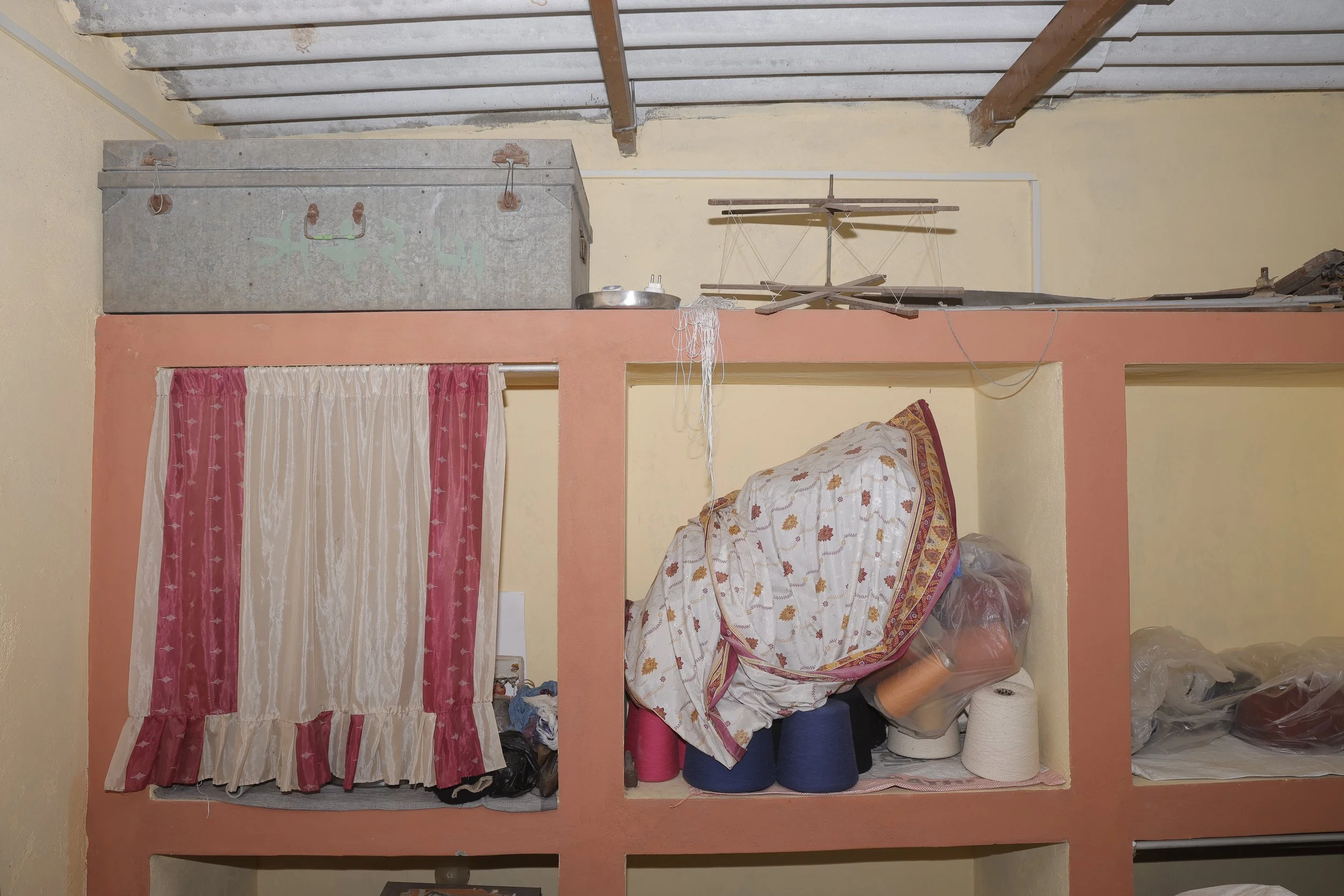
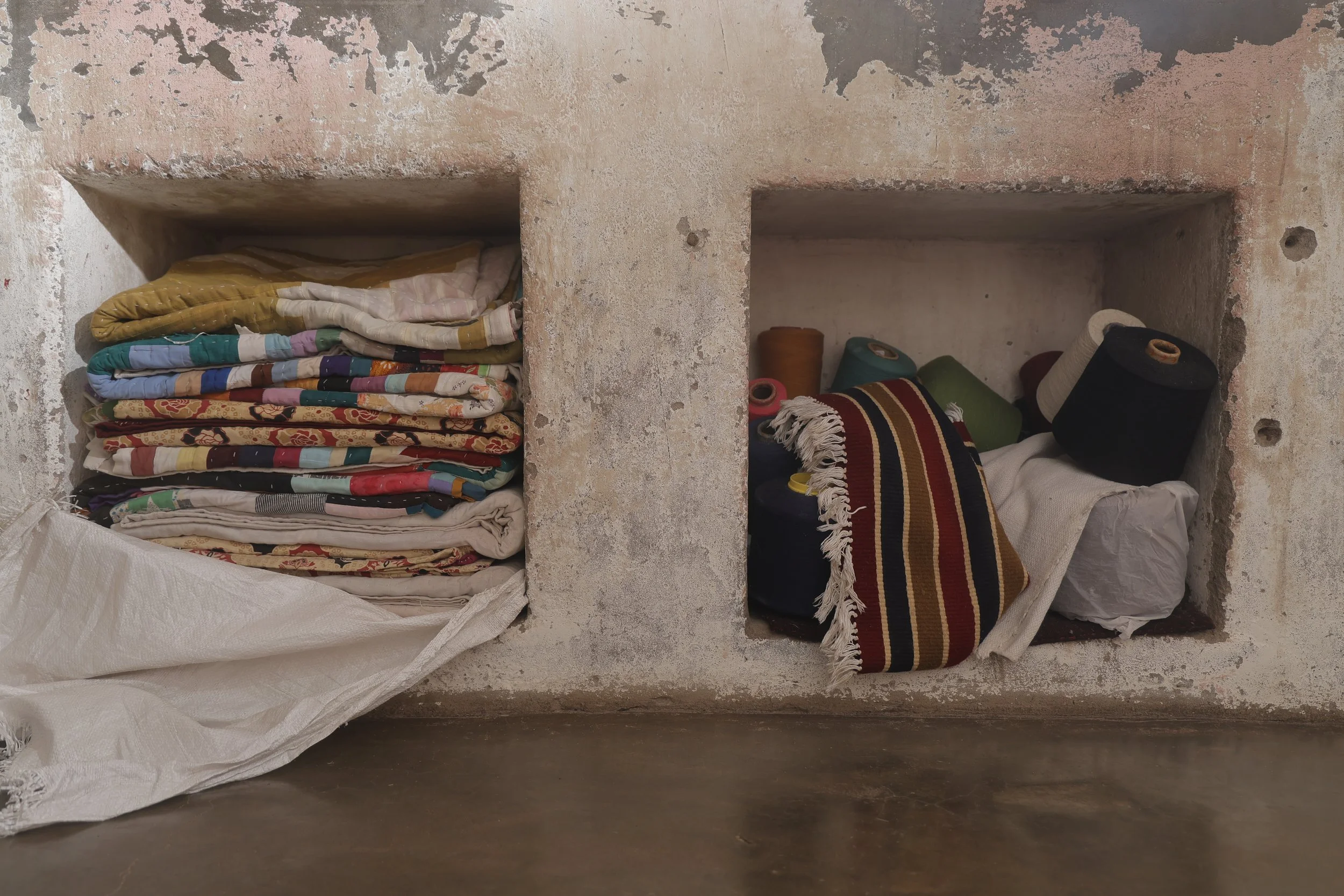
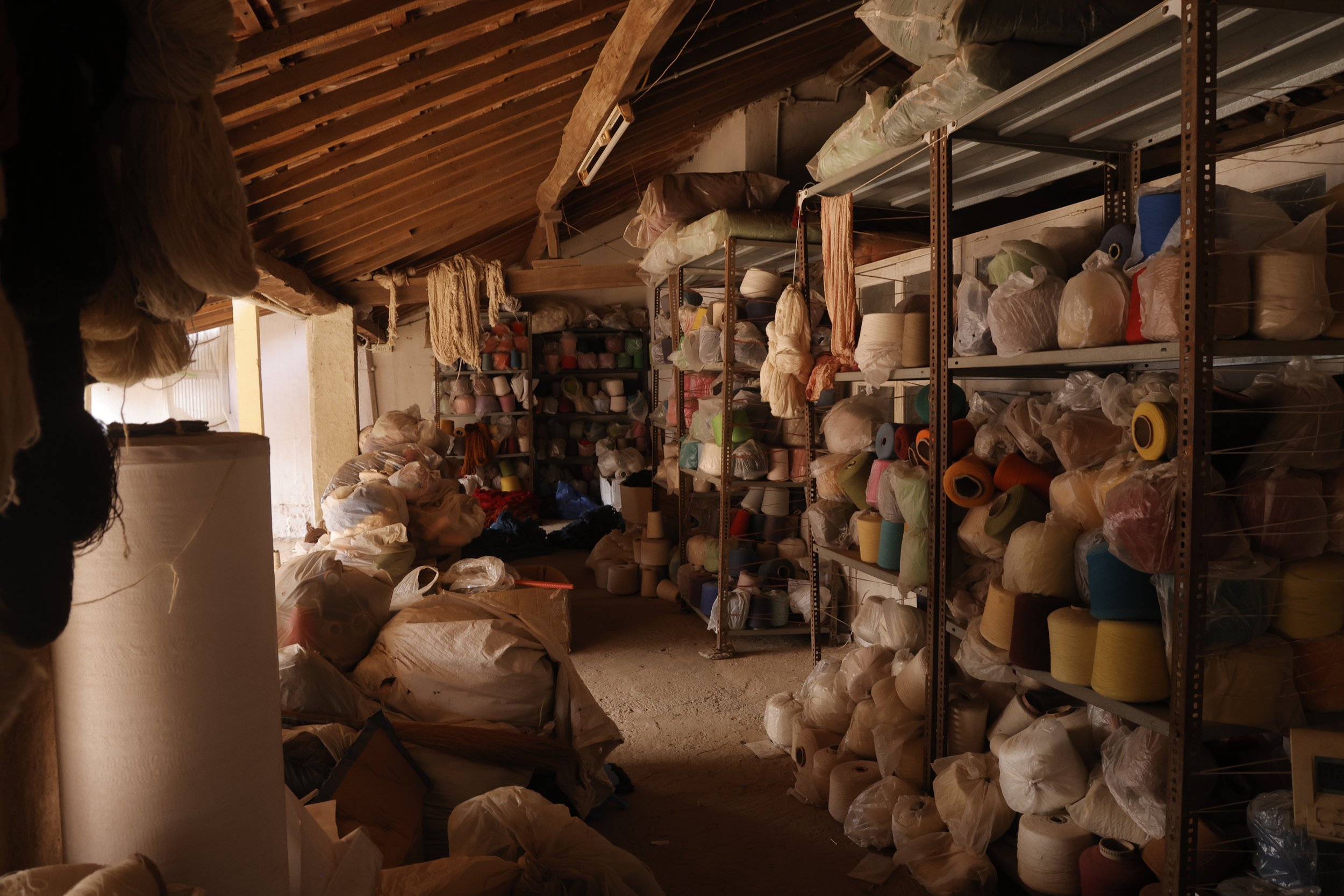
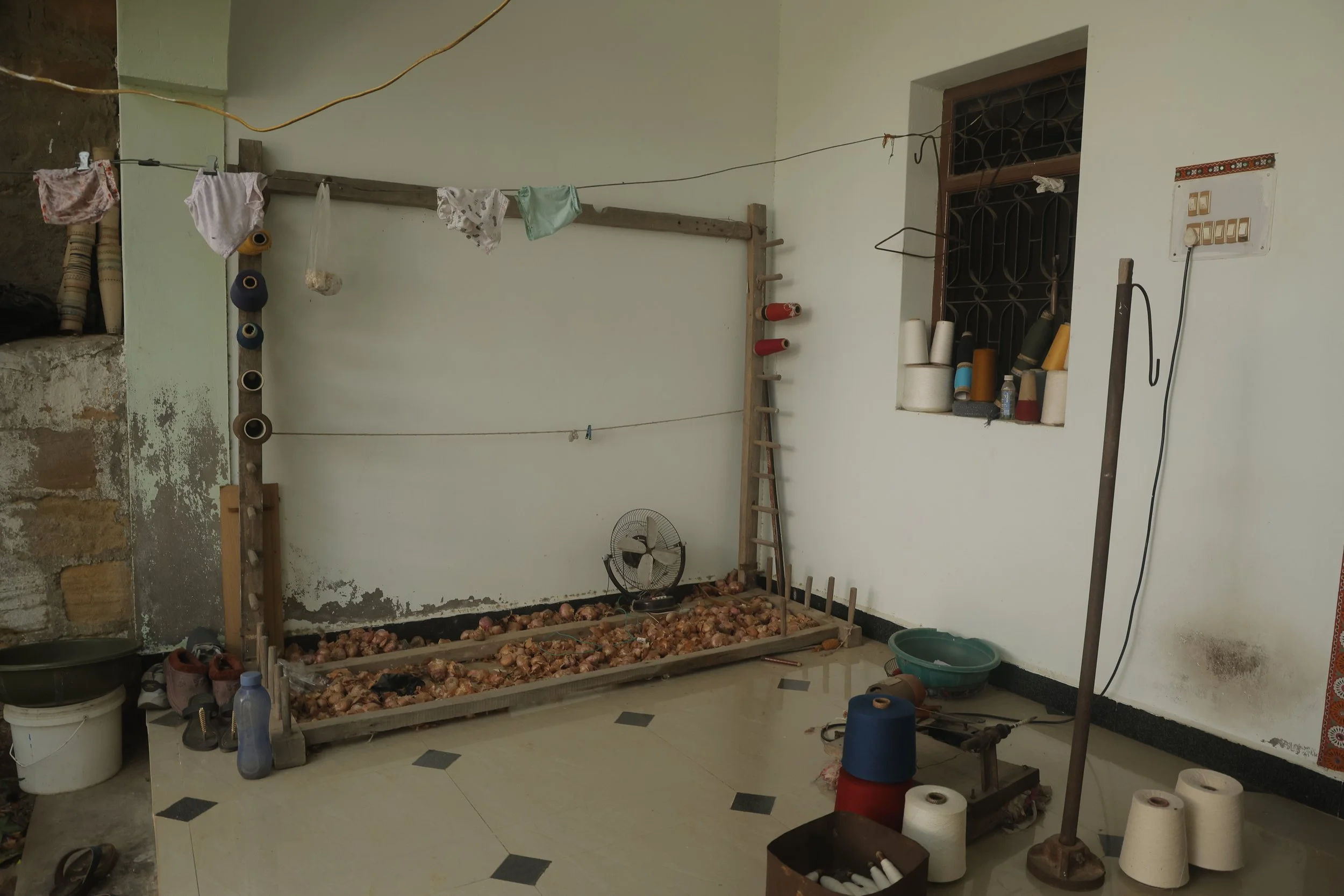
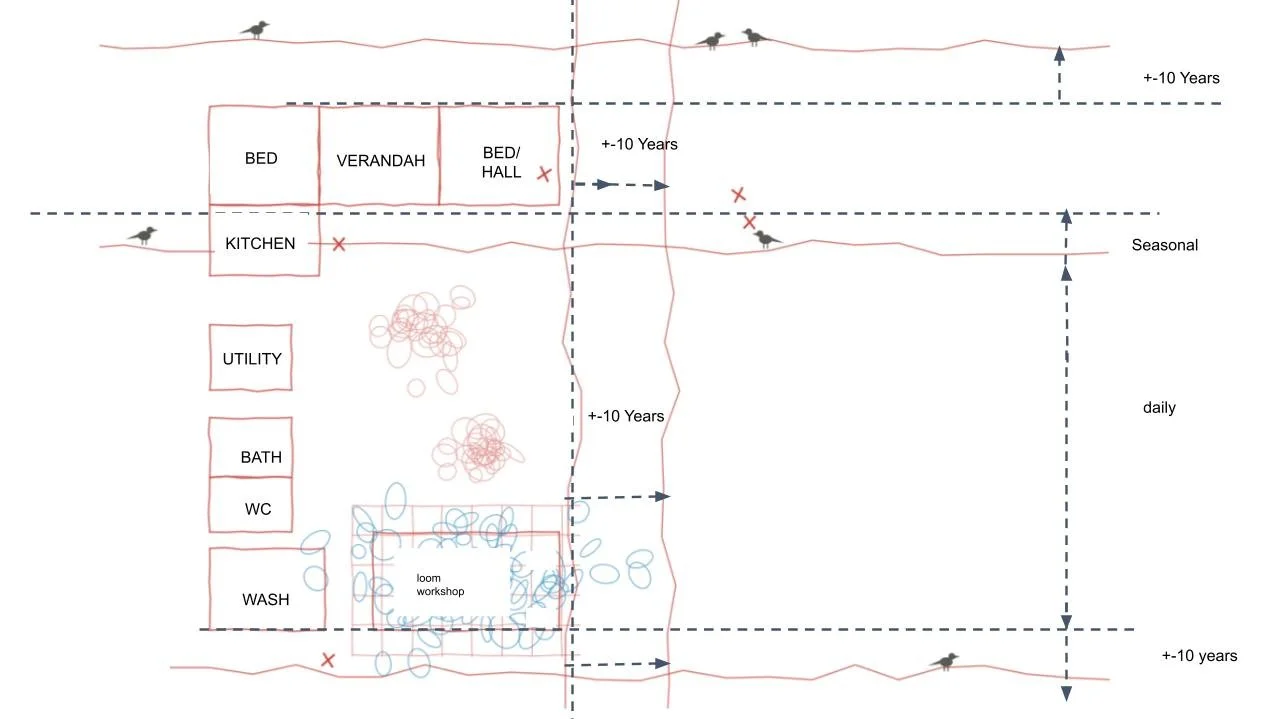
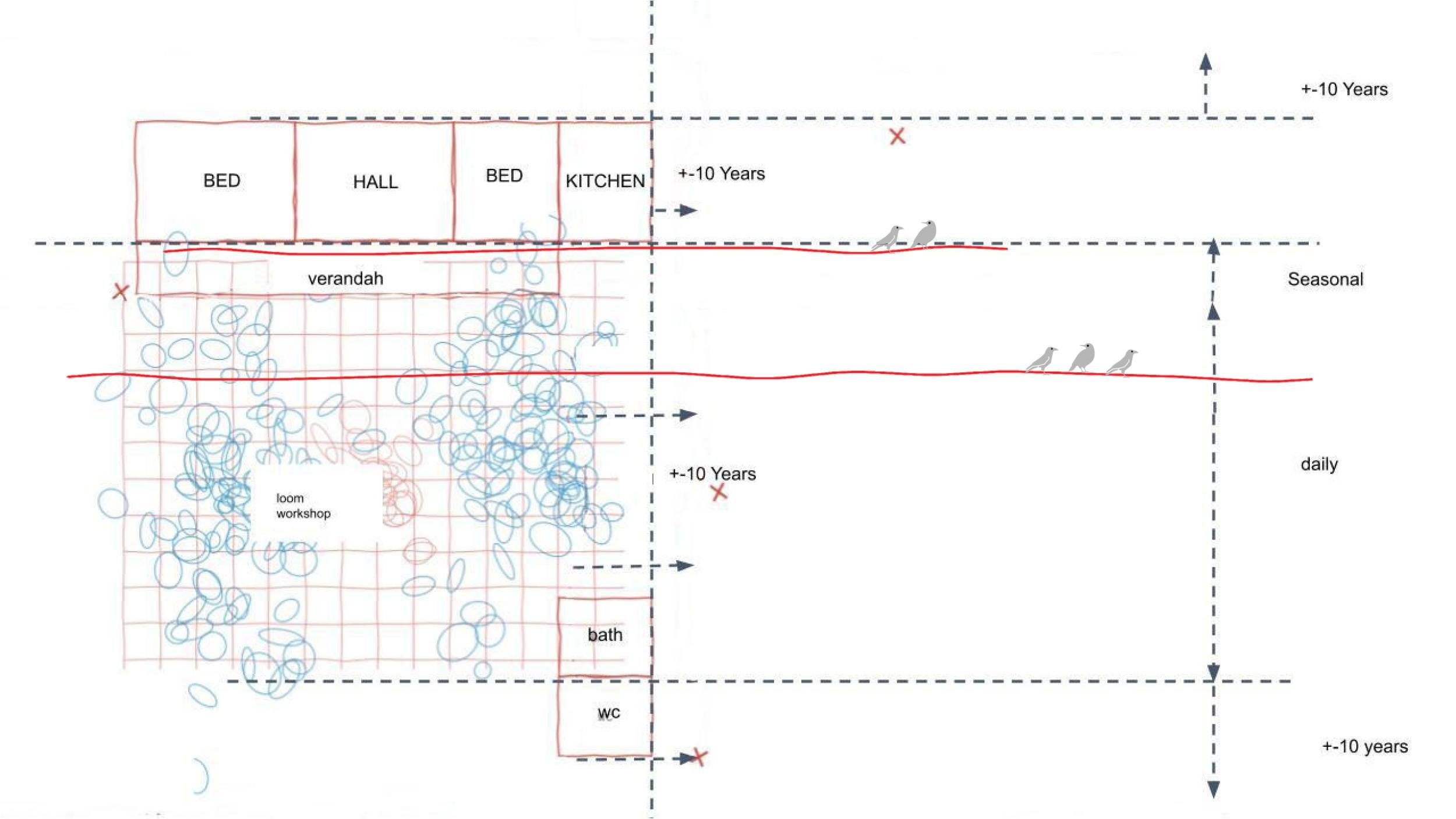
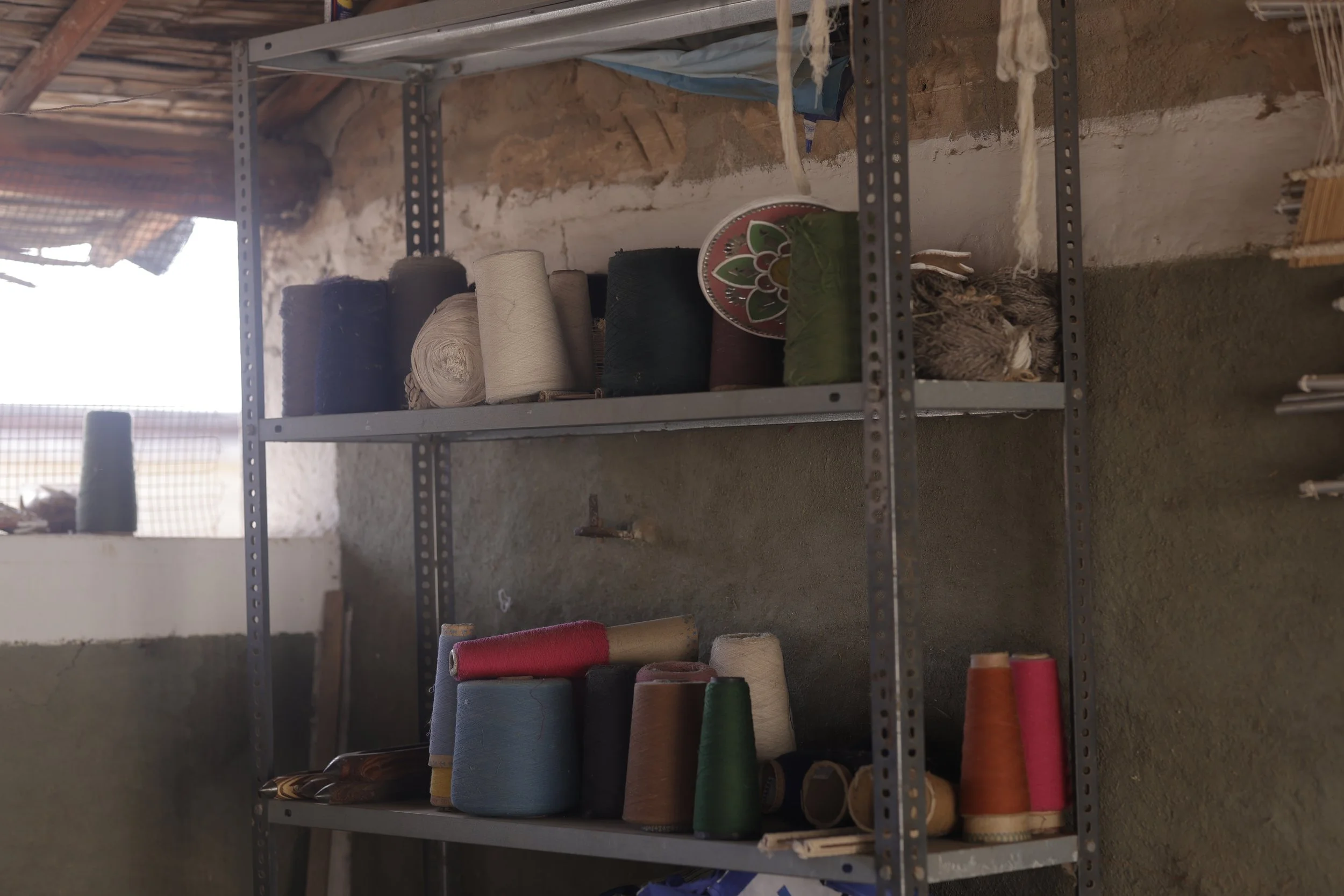
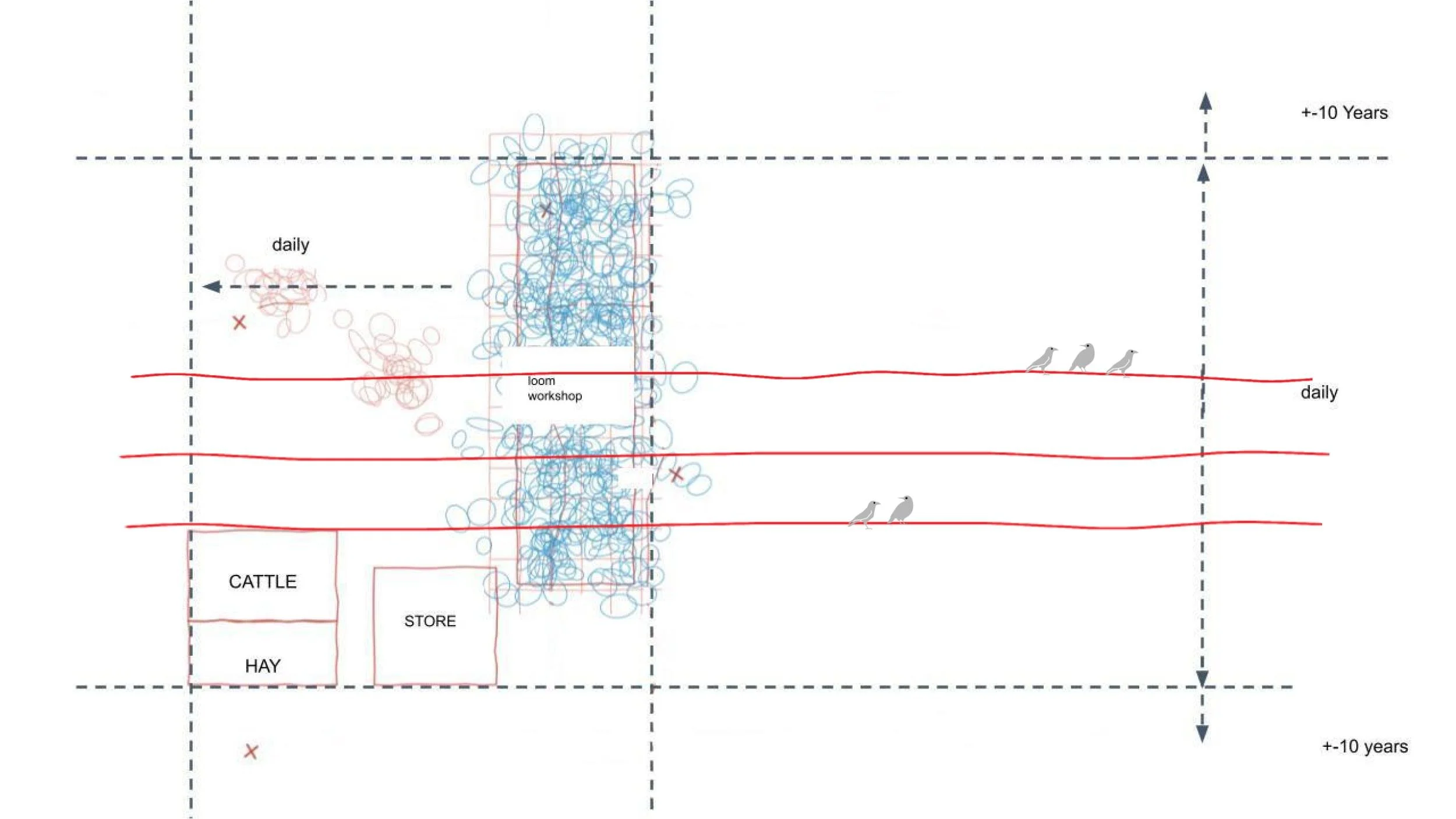
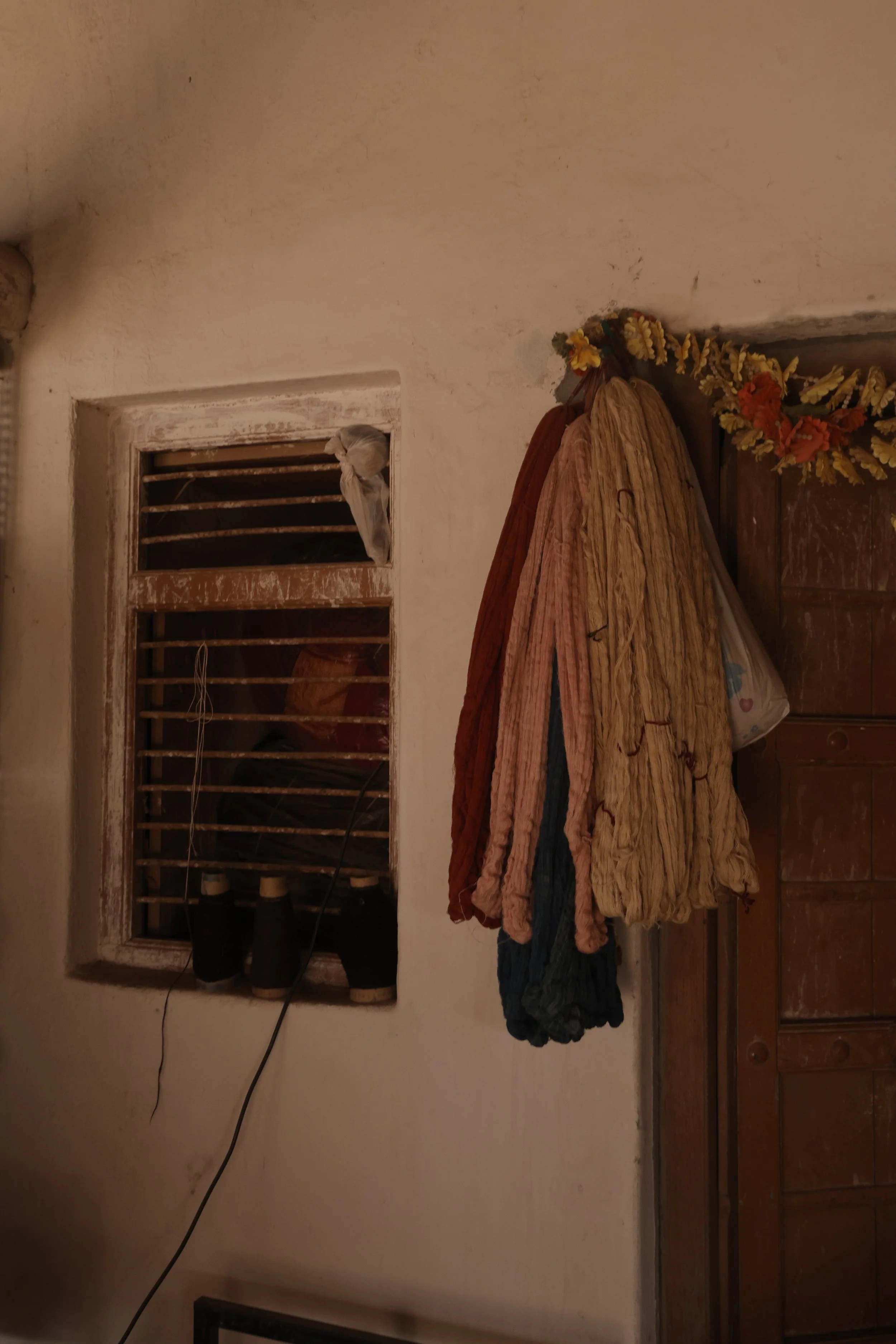
This photo set documents weaving households in Bhujodi, Kutch, reading them as working buildings rather than as backdrops. It attends to two things at once: the thresholds a loom creates inside a home, and the journey unsold cloth takes once it leaves the loom and never leaves the house.
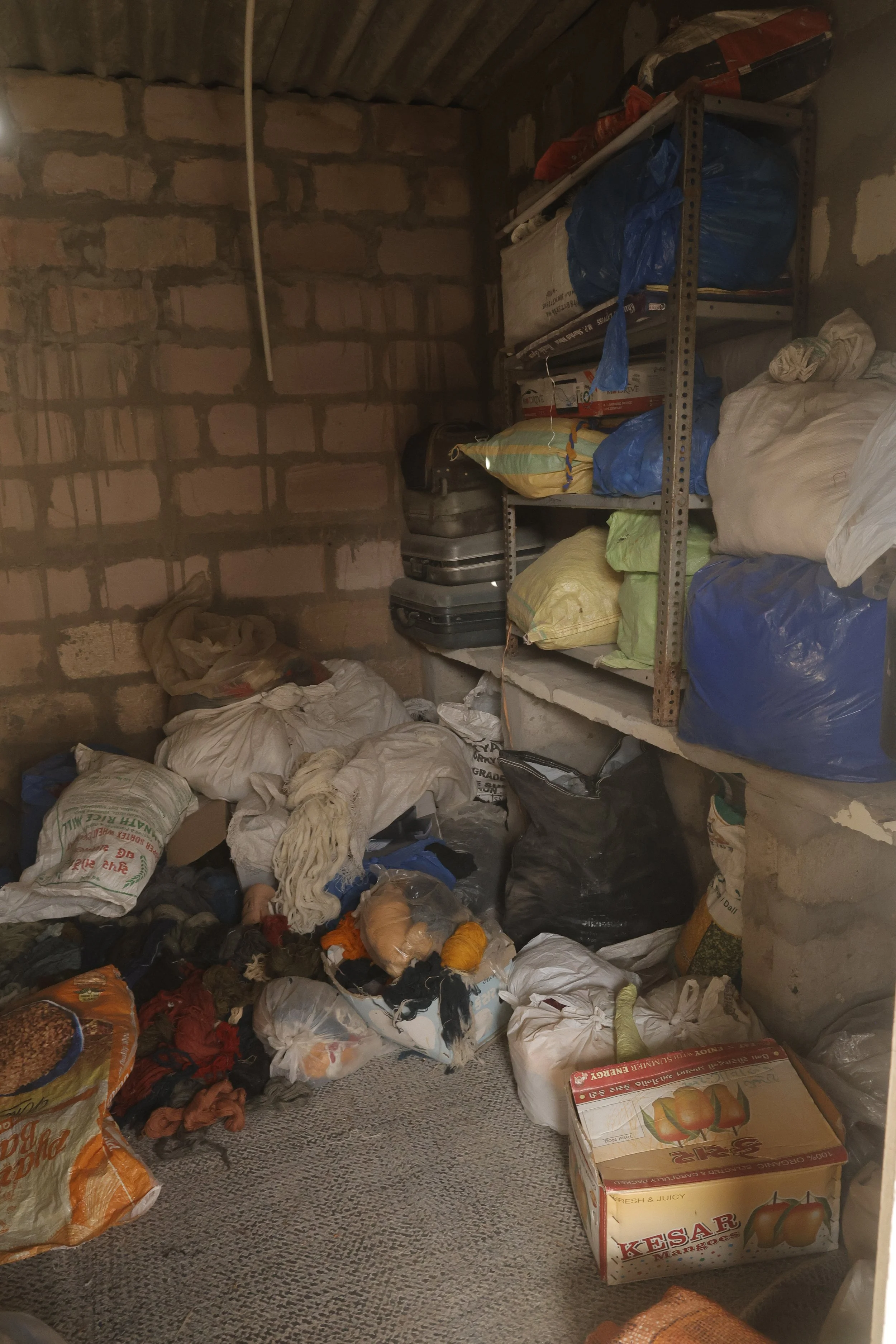
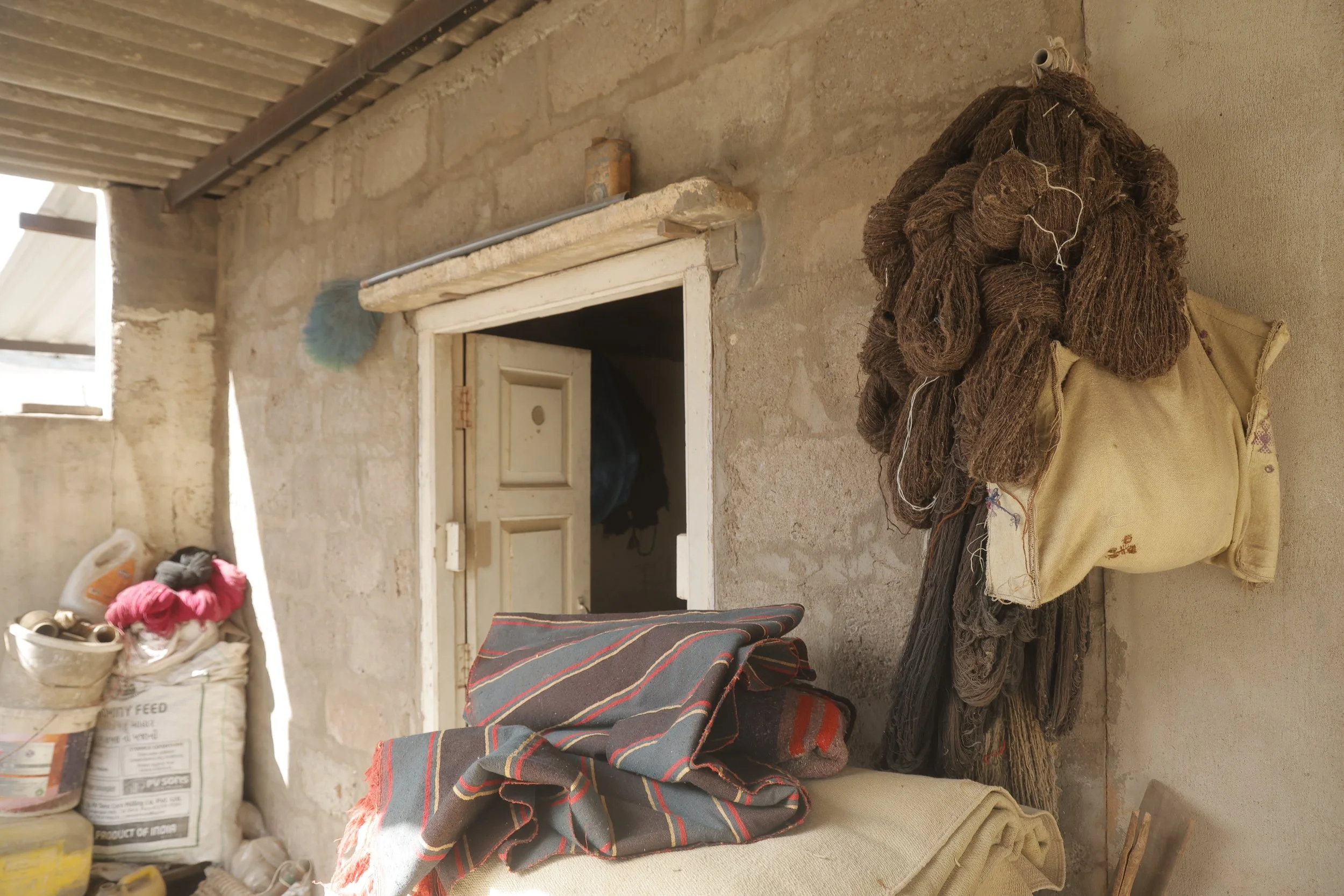
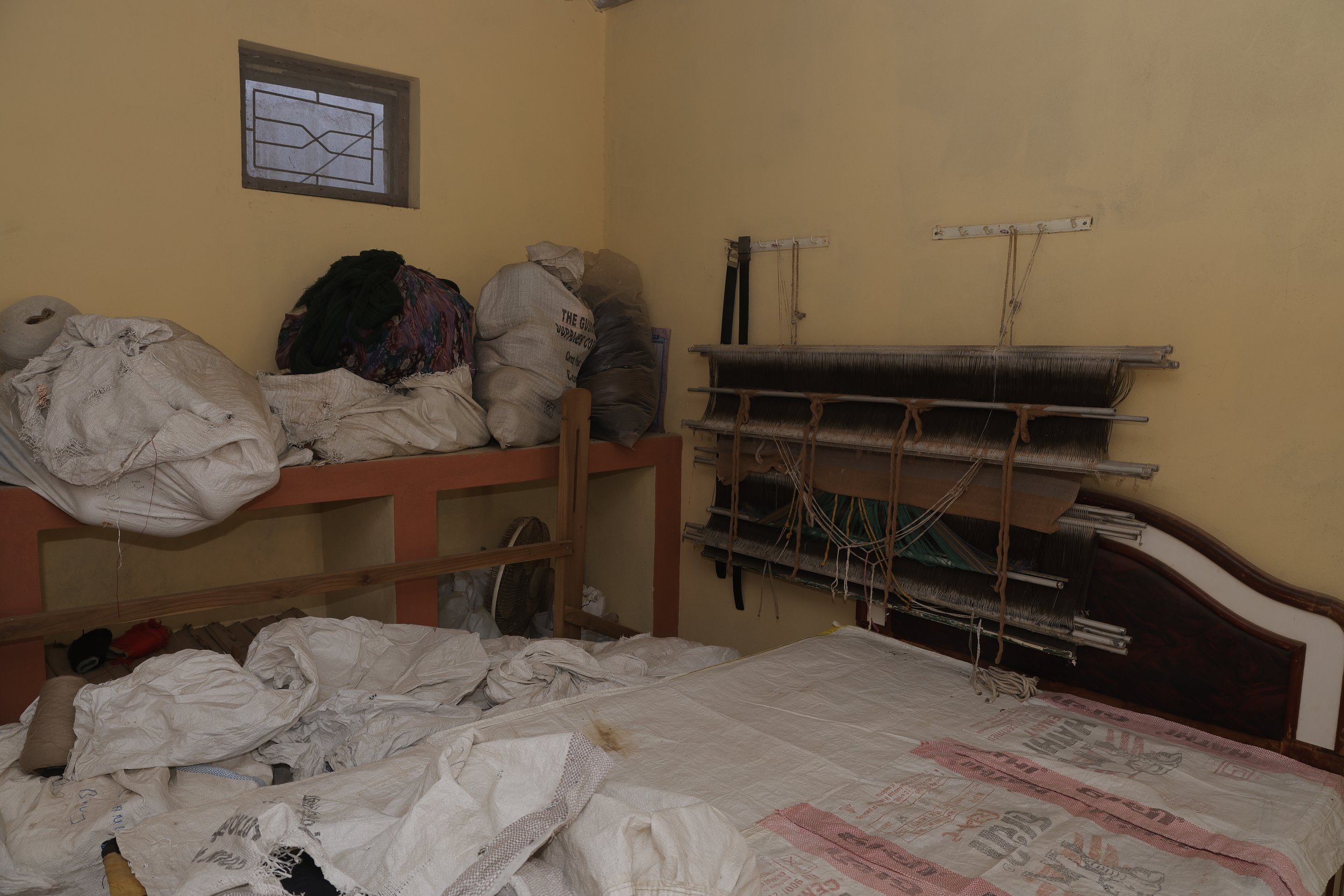
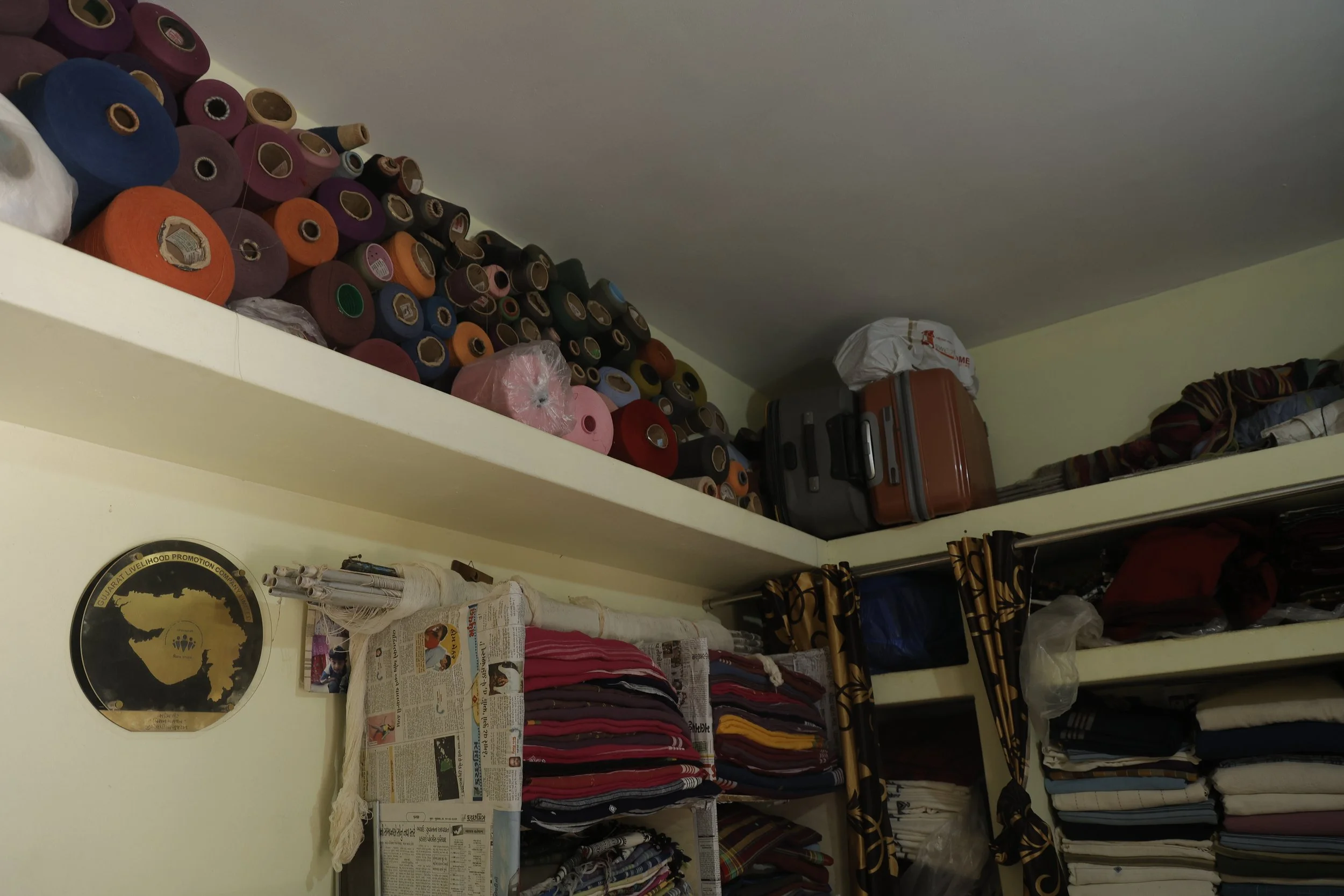
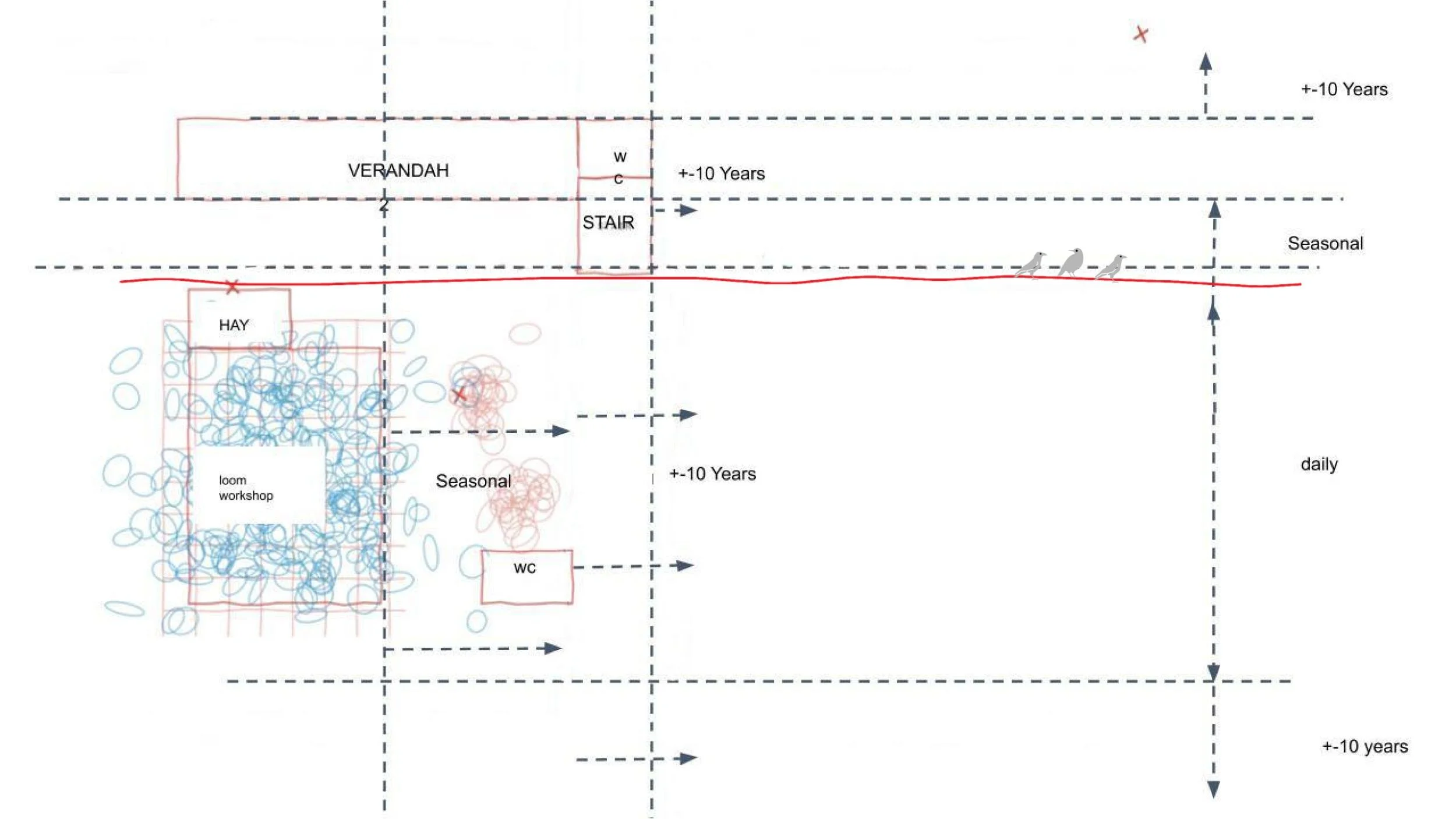
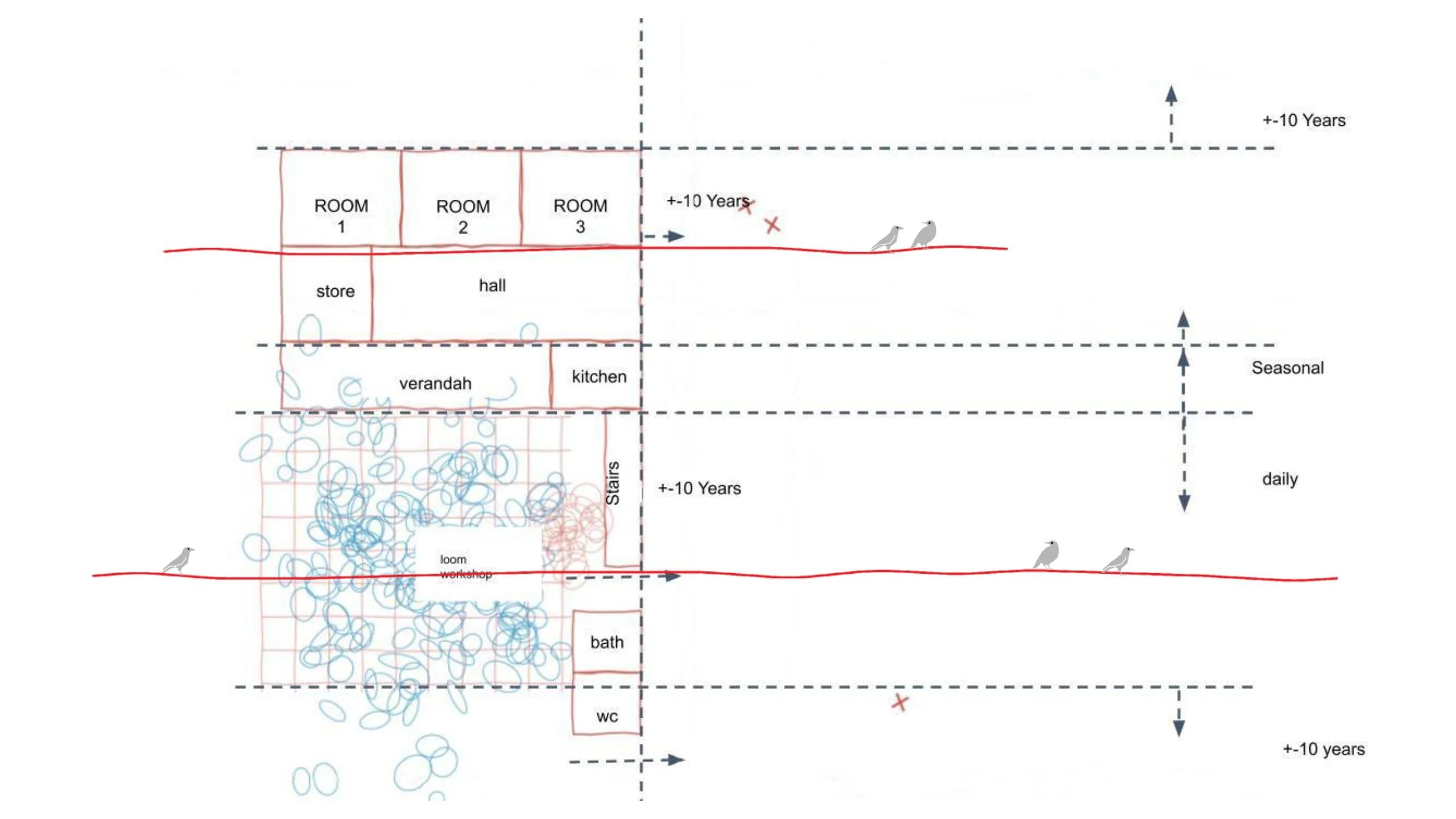
The thresholds are measurable. A pit loom sets the height at which a body works and the line below which stock can be stored. A verandah is simultaneously the place a weaver receives a buyer and the place stock hangs overhead, at 4 feet 10 inches from the floor, below the 5 feet 5 inches of a standing adult. A bedroom of 107 square feet carries stock across 72 percent of its floor plane. These are not metaphors for pressure on the household. They are the dimensions of it.
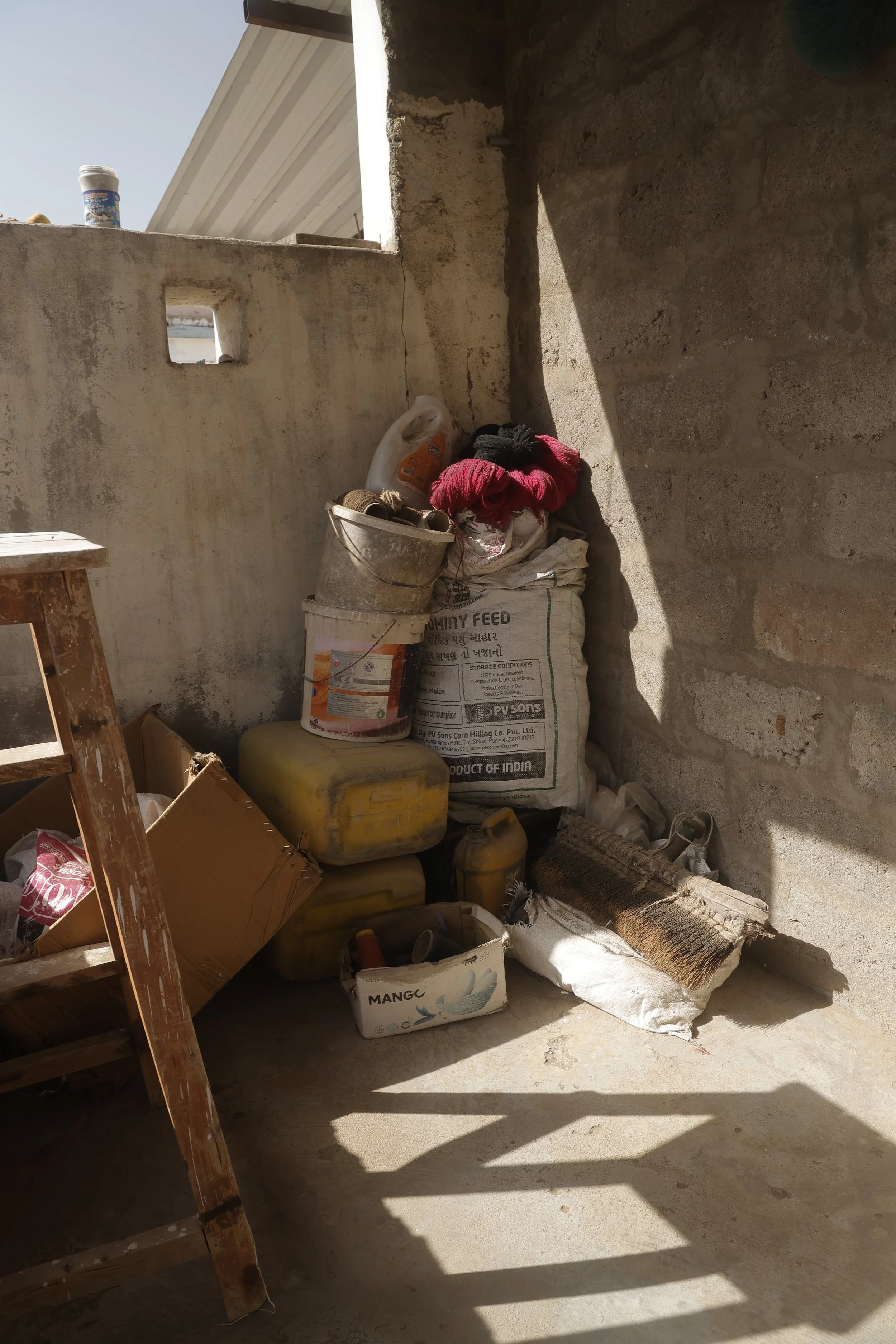
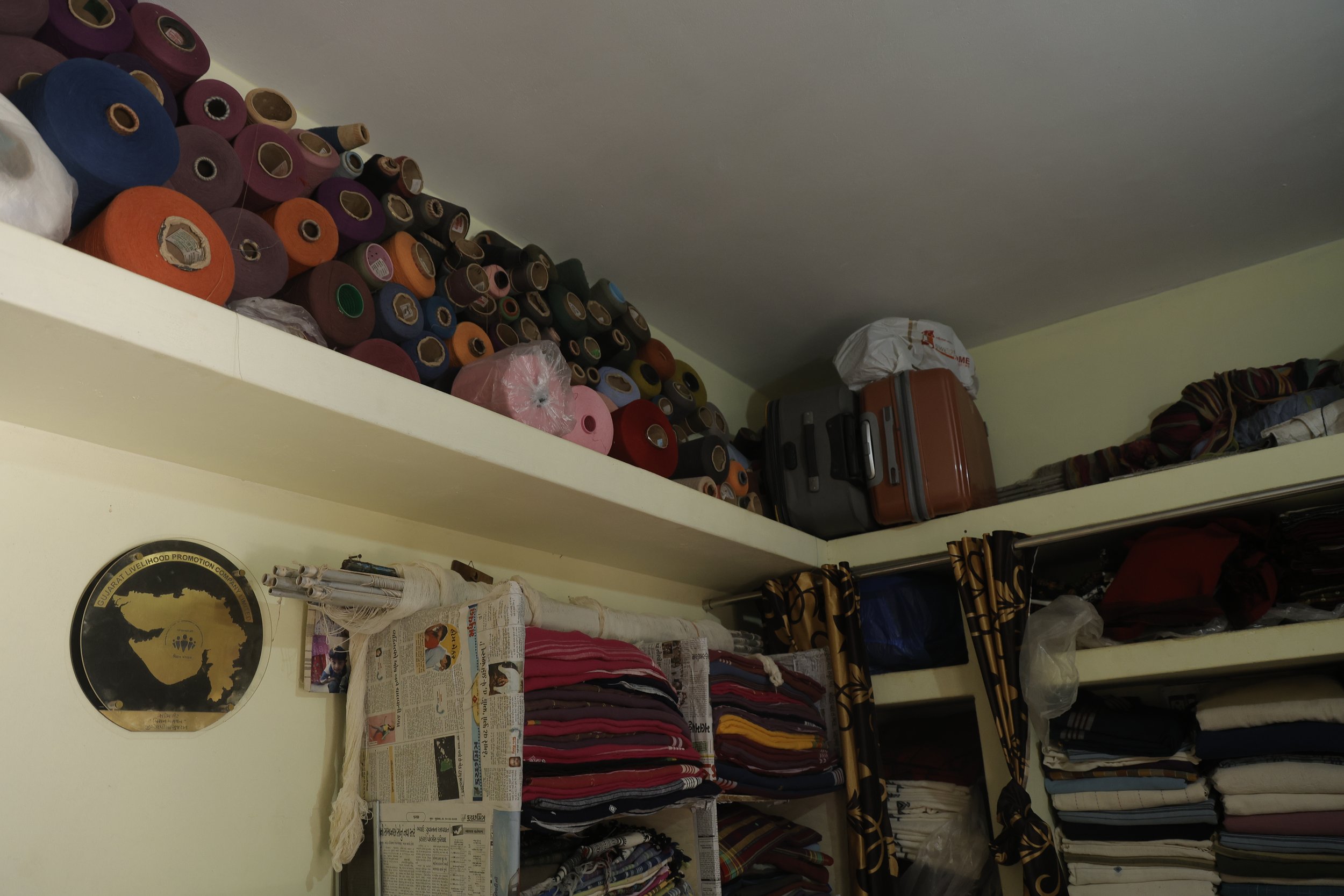
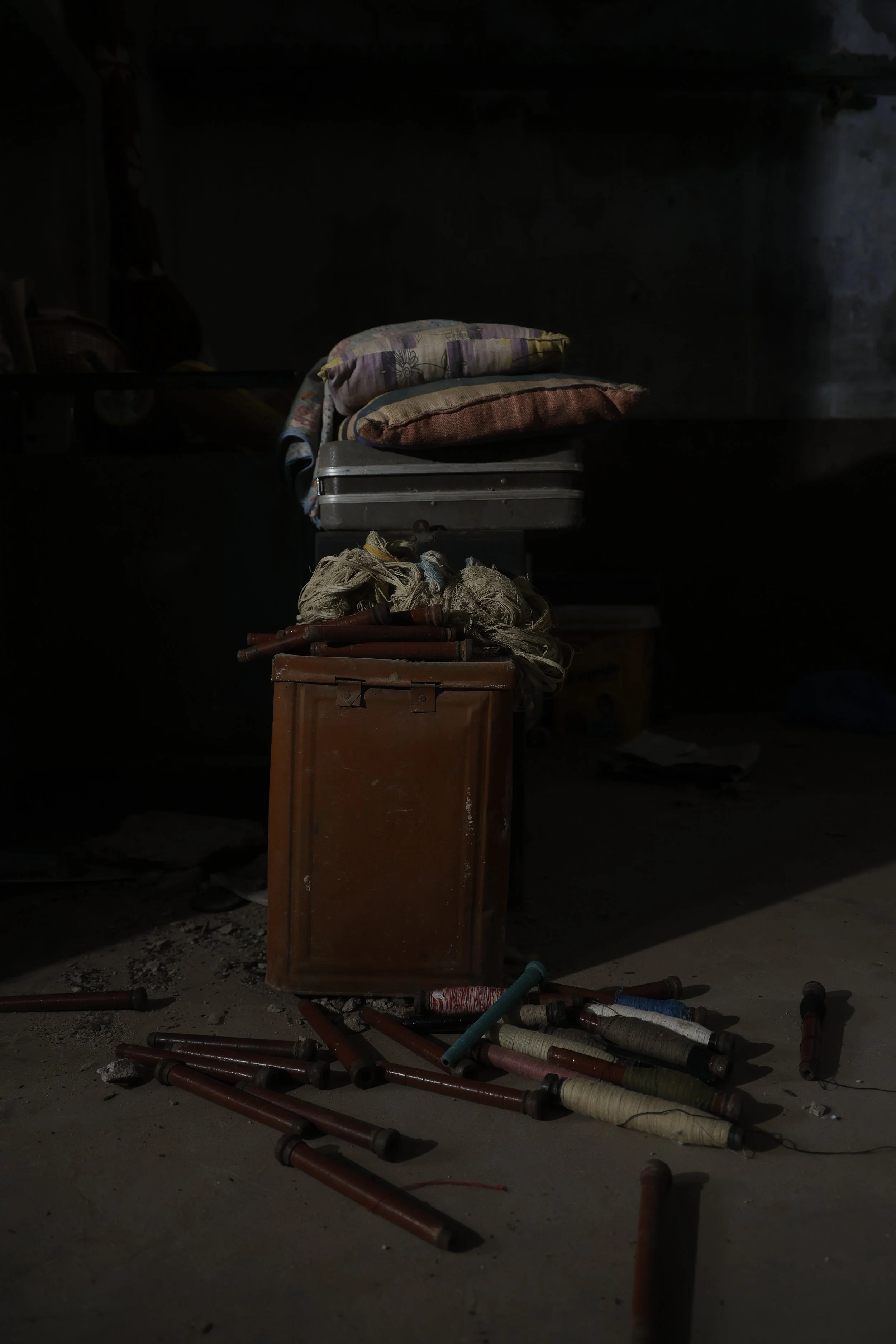
The deadstock journey runs from loom to shelf to bedroom to nothing. Cloth that does not move is not discarded, because discarding it would mean writing off the yarn and the days already in it. So it is kept, and the storing is unpaid, unmeasured and unacknowledged. The photographs follow that cloth through the house the way one would follow it through a warehouse, because that is what the house has become.
One detail sets the frame. The only written storage specification anywhere in these households is printed on a 100 pound cattle feed sack: store under ambient temperature and dry conditions, protect against dust, insects and rodents. A development agency plaque hangs at eye level beside the loaded shelves. The cloth itself has no protocol at all.
Method note
Photographed on site alongside measured drawings, so that each image can be read against a dimension rather than an impression.